Operation Report 3 – 2025 (03/05/25 – 22/05/25) Written by Ingo Werth, Skipper
Like every operation, the third of this year began at our home port to carry out final repairs, take on provisions, and familiarise the crew with the NADIR and all safety protocols.
After a few days, we set sail and headed for Lampedusa to conduct our training. As some crew members were on board the NADIR for the first time, we took ample time for this. On patrol days, too, we consistently practised the evacuation procedures.
On the sixth day of our operation, we intercepted radio contact between the Frontex aircraft Eagle 2 and the Lampedusa radio control centre. Sixty-two people on a rubber boat were reported in distress. We intervened and headed for the estimated position as quickly as possible. When our tender reached the survivors, our crew was handed over two deceased young children, aged between 3 and 4. Both had died the previous day – presumably from dehydration.
The people on the rubber boat had departed from Libya three days earlier. Their engine had failed two days before our arrival. Since then, they had been left exposed to the wind, weather, and sea conditions.
During the evacuation to the NADIR, one man lost consciousness. After his circulation collapsed, resuscitation was attempted for 30 minutes, but remained unsuccessful. Survivors also reported that another person had gone overboard the previous day.
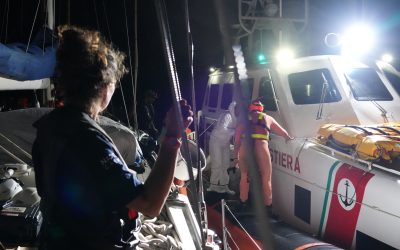
The Italian Coast Guard, called for support, took two infants with their mothers and two other seriously injured individuals on board. All other survivors and the bodies remained on the NADIR. A lot of people were suffering from chemical burns, some severe, and required hours of medical care from the crew. We set course for our assigned port of safety, Lampedusa, where the bodies of the deceased were handed over to the authorities. We remained on the island the following day.
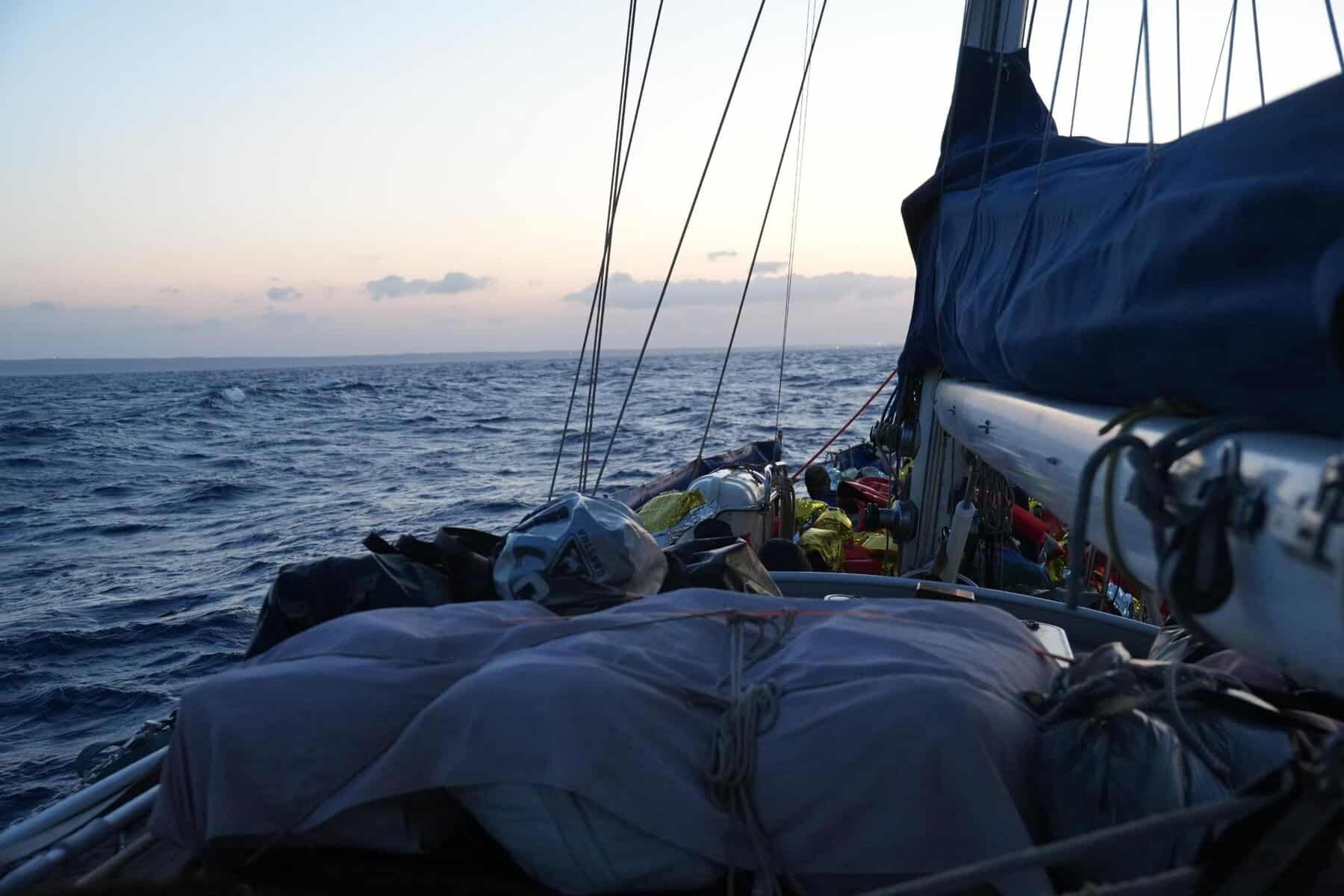
On the eighth day, we set out early in the morning. Only few ships from the civil fleet were present at sea these days. So around noon, we headed to a distress case alongside SeaPunk1. Coordinating with the SeaPunk1 crew, we took on the role of On-Scene Commander and brought all 69 people on board. We acted immediately, as there was a blind person on the rubber boat who was unconscious and in urgent need of assistance. Once the evacuation was complete, we headed for Lampedusa in the afternoon and were relieved when, three hours later, an Italian Coast Guard vessel met us to transport the people to Lampedusa as quickly as possible.
We were obliged to return to Lampedusa, as a new regulation requires all operational vessels to deliver a report in person to the Coast Guard port office.
Due to drastically deteriorating weather conditions, we remained sheltered in the Lampedusa harbour for several days, only setting out again on the twelfth day of our operation. That same night, we encountered people on an iron boat – a ›newer‹ type of vessel of flight. The boat was built so deep that the people, even when standing, could barely see over the railing. Inside the boat, there was no way for them to climb up to exit. As they were positioned parallel to us in strong winds and heavy seas, they were unable to board the NADIR directly. Consequently, we had to transfer the 54 people to the NADIR using our tender. As the sun rose, we were able to transport all survivors to Lampedusa.
Seven hours after our arrival, we set out again and provided assistance to the civil search and observation sailing vessel Dakini that evening. The Dakini crew had already distributed life jackets to 41 people. We remained nearby for safety until an Italian Coast Guard boat took everyone on board and brought them to Lampedusa. We continued to drift through the night and into the morning. At noon, we sighted a fibreglass boat. There were 31 people on board. We accompanied them. When they ran out of fuel, we took the boat in tow until the Coast Guard arrived to assist, allowing all 35 people to board their speedboat.
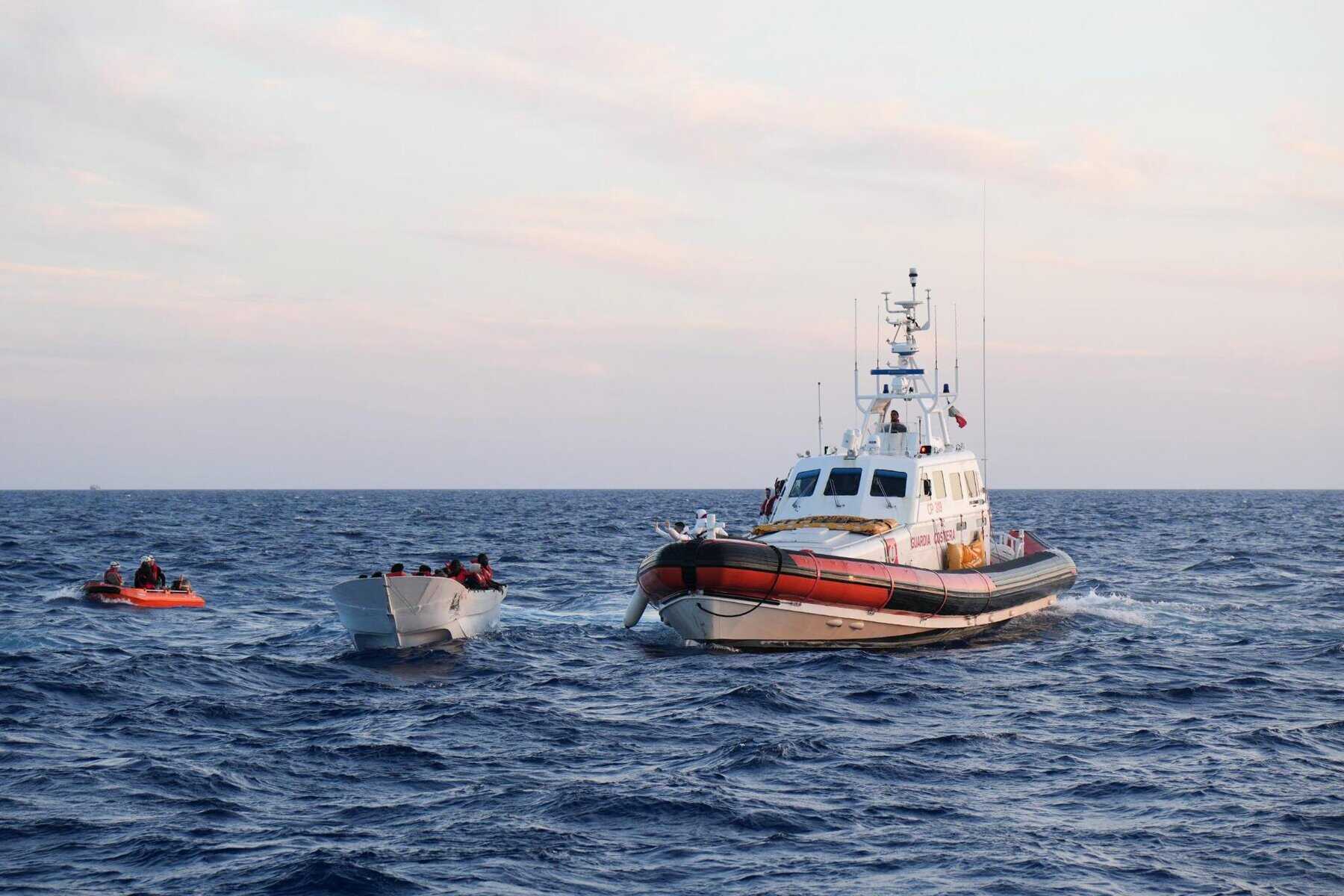
On the 15th day of our operation, we encountered 110 people on board a wooden boat off the Tunisian coast. After initial uncertainty regarding our intentions, we were able to make it clear that from us they would not face an illegal pushback (such as those carried out by the so-called Libyan Coast Guard). We distributed life jackets and accompanied them until their engine failed, at which point we brought everyone on board. Shortly after, a Coast Guard vessel arrived and took over all 110 people.
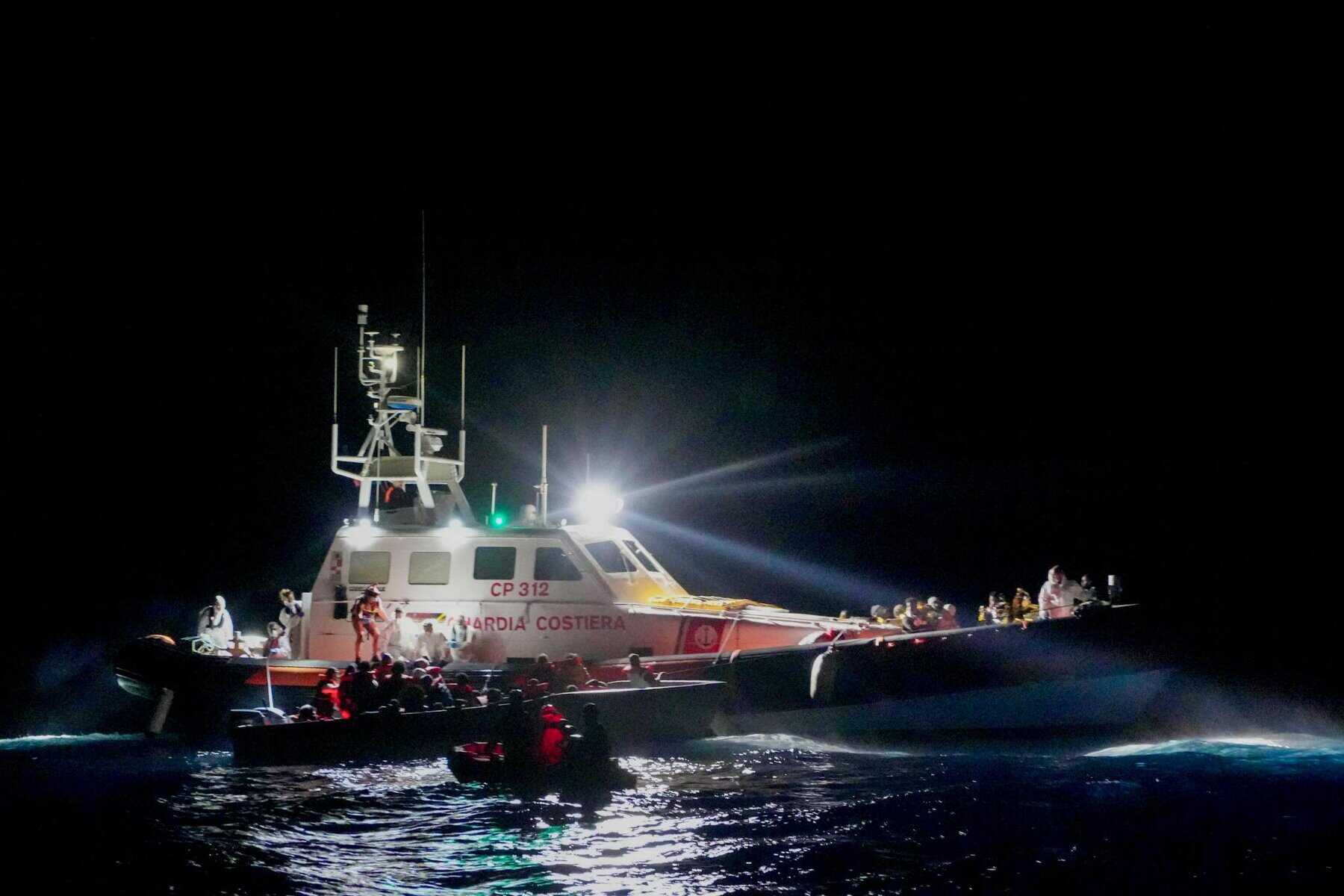
In this instance too, we had to conduct an eight-hour journey to personally deliver a report in the Lampedusa Coast Guard office – maybe a strategy to keep us away from the operational area. After arriving in the early morning, we cleaned the ship, attended the authorities, had the NADIR special disinfected according to regulations, bought supplies, and left the port again just five hours later. No other vessel was active in the area, and we patrolled until the wind increased significantly again. We spent the final night in Lampedusa as a port of safety and departed from there early the next morning to reach our home port by evening.
Our third operation concluded with many new impressions, grief, and anger, but also with motivation and the sense of having made a difference. We are heartened by the solidarity at seawith other civil search and rescue crews, as well as with the Italian Coast Guard, who once again cooperated with us reliably throughout this operation.
Credits: RESQSHIP