NADIR’s first operation in 2026 patrolling the Central Mediterranean.
The start of 2026 has been marked by horror in the central Mediterranean. Since 1 January, at least 766 people on the move have gone missing, many of them caught in Hurricane Harry while attempting the crossing in search of a better life. For weeks, the sea has been washing bodies ashore.
Meanwhile, members of the European Parliament voted at the end of January to further tighten migration policies. Among the measures adopted is the installation of Return Hubs outside the EU’s territory, effectively facilitating the deportation of people in exile, alongside new provisions that criminalise them solely on the basis of their administrative status.
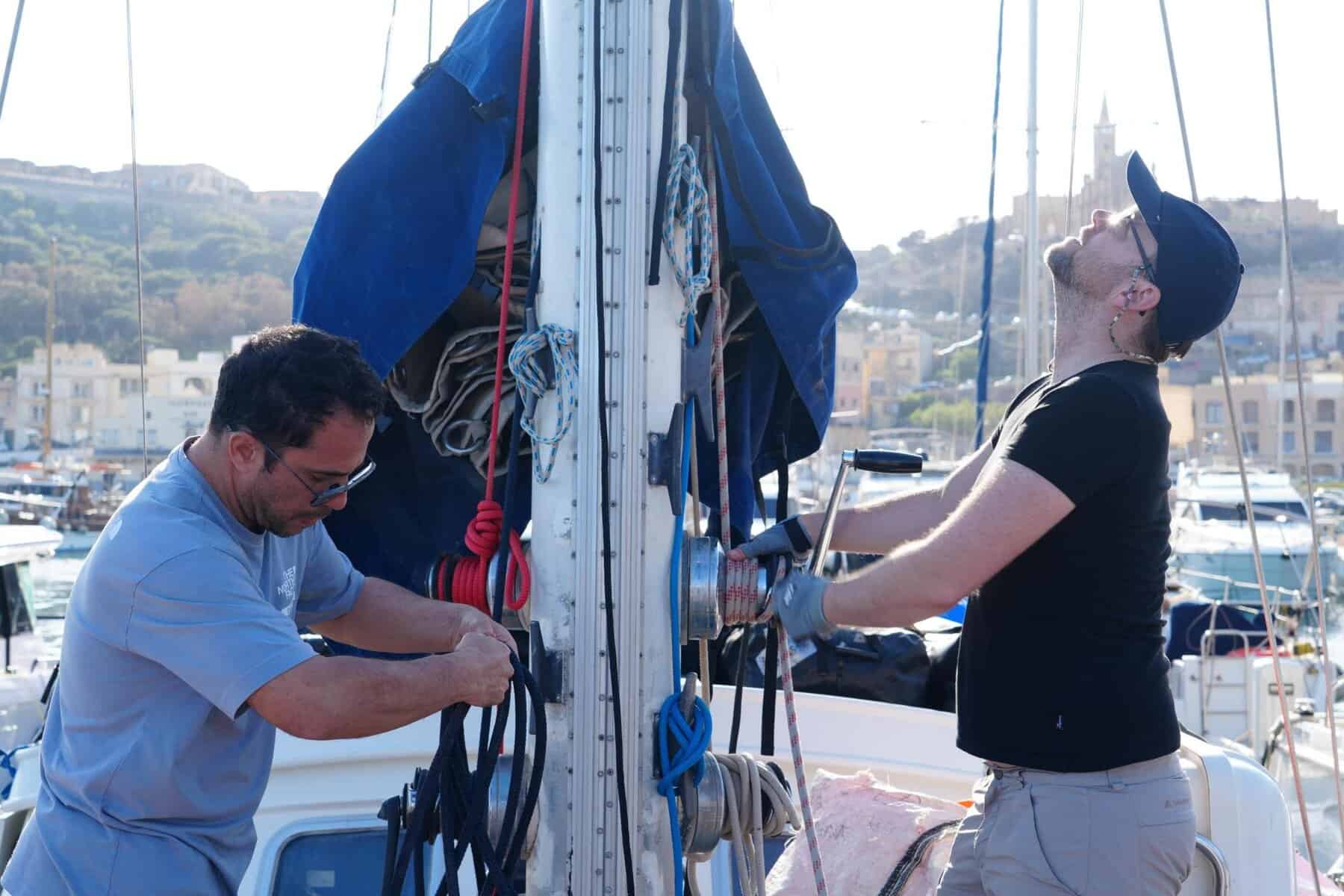
It is against this backdrop that, in early March the NADIR begins its first rotation of the season, following four months of winter maintenance. We gather in our home port to finalise preparations for both the vessel and the crew. After a series of training sessions, briefings, provisioning, we set sail on 12 March for Lampedusa to complete our operational training.
Bad weather is approaching the Mediterranean, and we know our window of operation will be short before we are forced to seek shelter in Lampedusa. More than anything, it is a race against time for the small boats that have departed from Tunisia or Libya and may soon find themselves exposed to the upcoming storm.
On 14 March, the organisation Alarm Phone – Watch the Med, which receives and relays calls from people in distress at sea, informs us that it is overwhelmed with nine boats that have already reached out, requesting assistance. We immediately set course for 35 people on a small vessel located five hours south. Before we could reach it, it is evacuated by the Italian coastguard.
That same evening, we turn back towards Lampedusa, where we remain for the next four days as the weather deteriorates. Once ashore, the stopover offers a rare opportunity for crew members – some of whom are on their fourth rotation – to finally meet long-standing partners, whom we usually only glimpse during our brief stops on the island. On this small island, a gateway to Europe, an entire network of solidarity continues to take shape in response to the tragedies caused by European migration policies. In recent days, we have learned that a two-year-old child is missing and that a man’s body has been brought back to shore. Our thoughts are first and foremost with their loved ones and their companions.
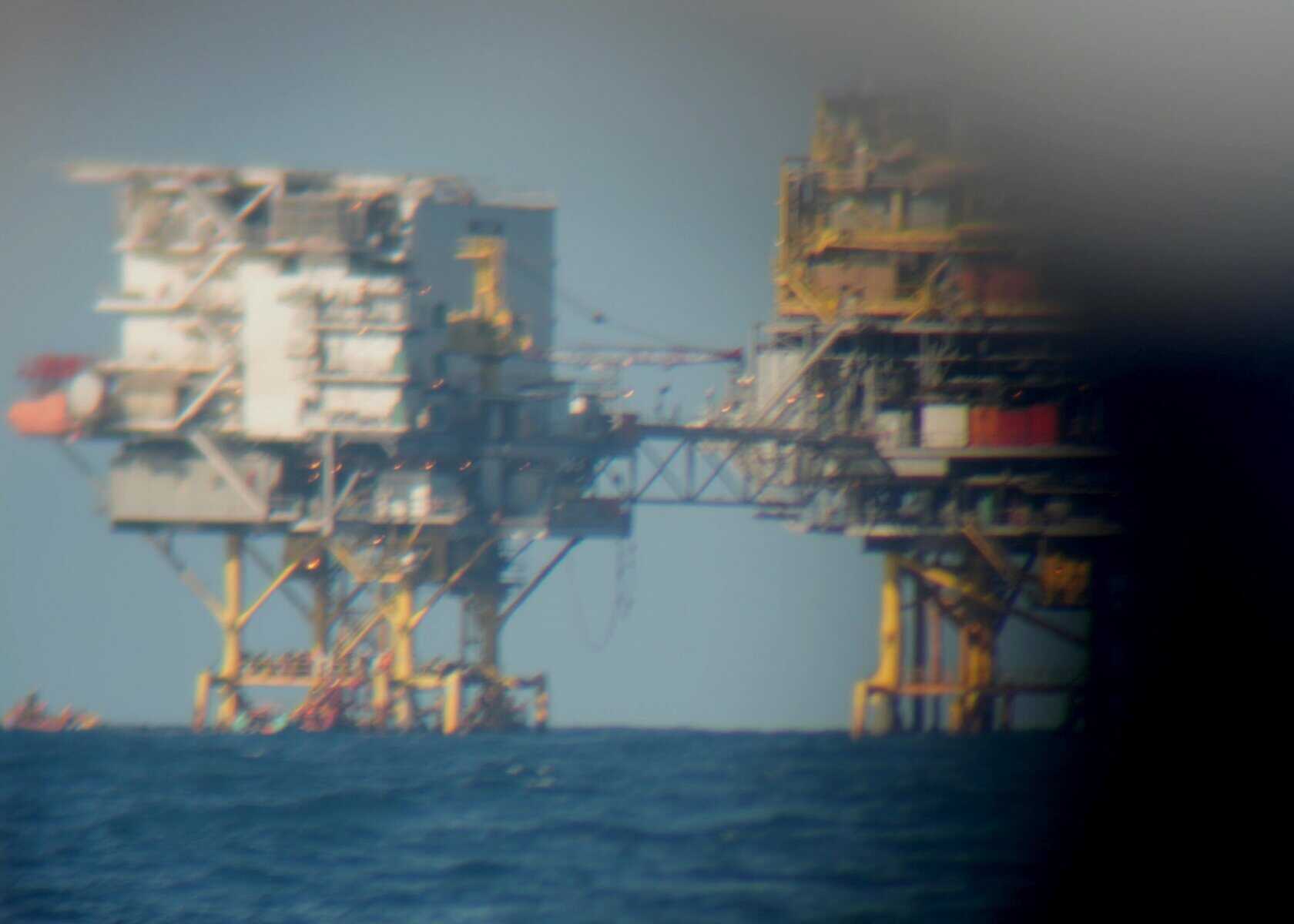
We set sail again on the evening of 17 March, heading towards the Miskar gas platform, off the coast of Tunisia, where around a hundred people have been stranded during four days of storm. While the platform is less dangerous than an unseaworthy vessel adrift at sea, it is far from a safe place for the women, men, and children who have taken refuge there.
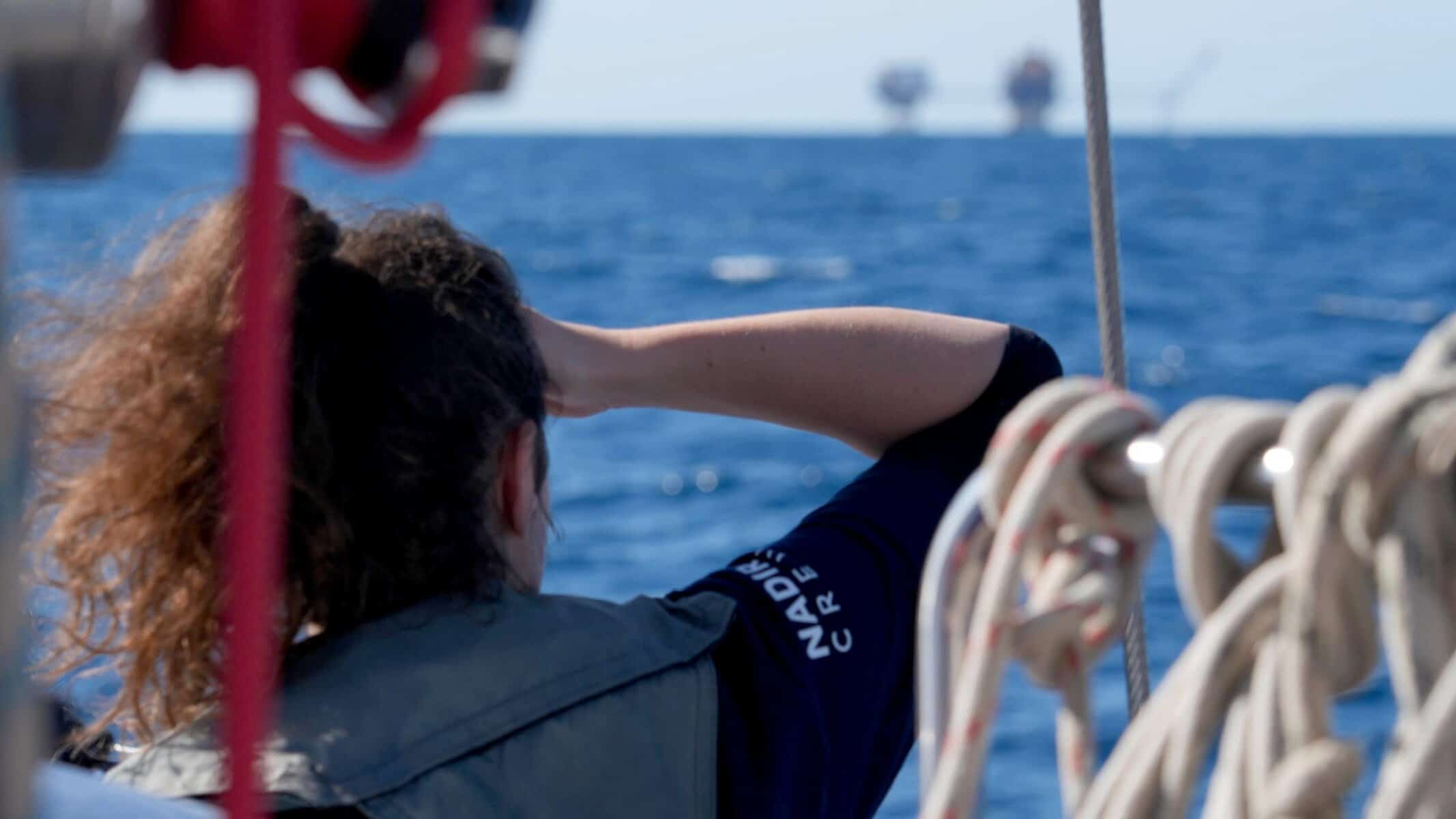
We arrive on site the following day, alongside Trotamar III and Ocean Viking, two other NGO-operated rescue vessels. We await instructions from the Maritime Rescue Coordination Centers on how to proceed. After a few hours, Ocean Viking, which has a significantly larger capacity than ours, takes all survivors on board.
This situation offers a stark reminder of the obstacles faced by humanitarian organisations in the Mediterranean: The Italian government assigns Ocean Viking a port of safety in Marina di Carrara, a four-day sail from the Miskar platform, effectively preventing the vessel from operating for over a week.
Over the following six days, we remain operational and respond to every distress alert we receive. Yet, in a situation almost unprecedented since the NADIR began its missions, we are unable to intervene in any case. Of the six boats reported to us, one – carrying 43 people who departed from Sfax on 17 March – remains missing to this day. Another is eventually evacuated by the Italian coastguard after four days adrift at sea, while the remaining four are intercepted by the so-called Libyan coastguard before we could arrive on scene.
These interceptions, carried out by the so-called Libyan coastguard, are illegal as they prevent people on the move to reach the EU border where they can request asylum. Yet this practice of border externalisation is continued to be funded and supported by the European Union and Frontex, even as recent UN reports condemn the systematic violence and abuses inflicted on people in exile by both the coastguard and Libyan authorities.
The obstinacy of Fortress Europe comes at a heavy cost: thousands of lives lost or shattered by a deadly political logic.
And although, on this mission, the NADIR is unable to intervene directly in support of people in distress at sea, these repeated interceptions underscore the vital importance of maintaining a presence in the central Mediterranean – or bear witness to what is unfolding there.
I will conclude with a quote shared by our skipper Kostis at the end of the rotation:
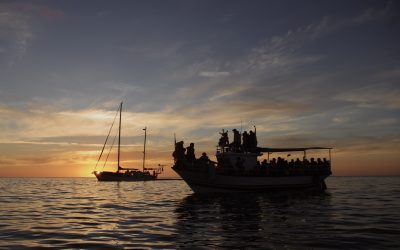
»One day, at sunset, the boat was sailing out to sea; we were surrounded by birds flying all around us. It struck me as an image of what freedom of movement should look like – for each and everyone of us.«
In the coming weeks, the NADIR will return to the central Mediterranean: to stand in solidarity with those in distress, to bear witness, and to continue speaking out. Until everyone can hope for a better life, we will remain active – and we will not remain silent.
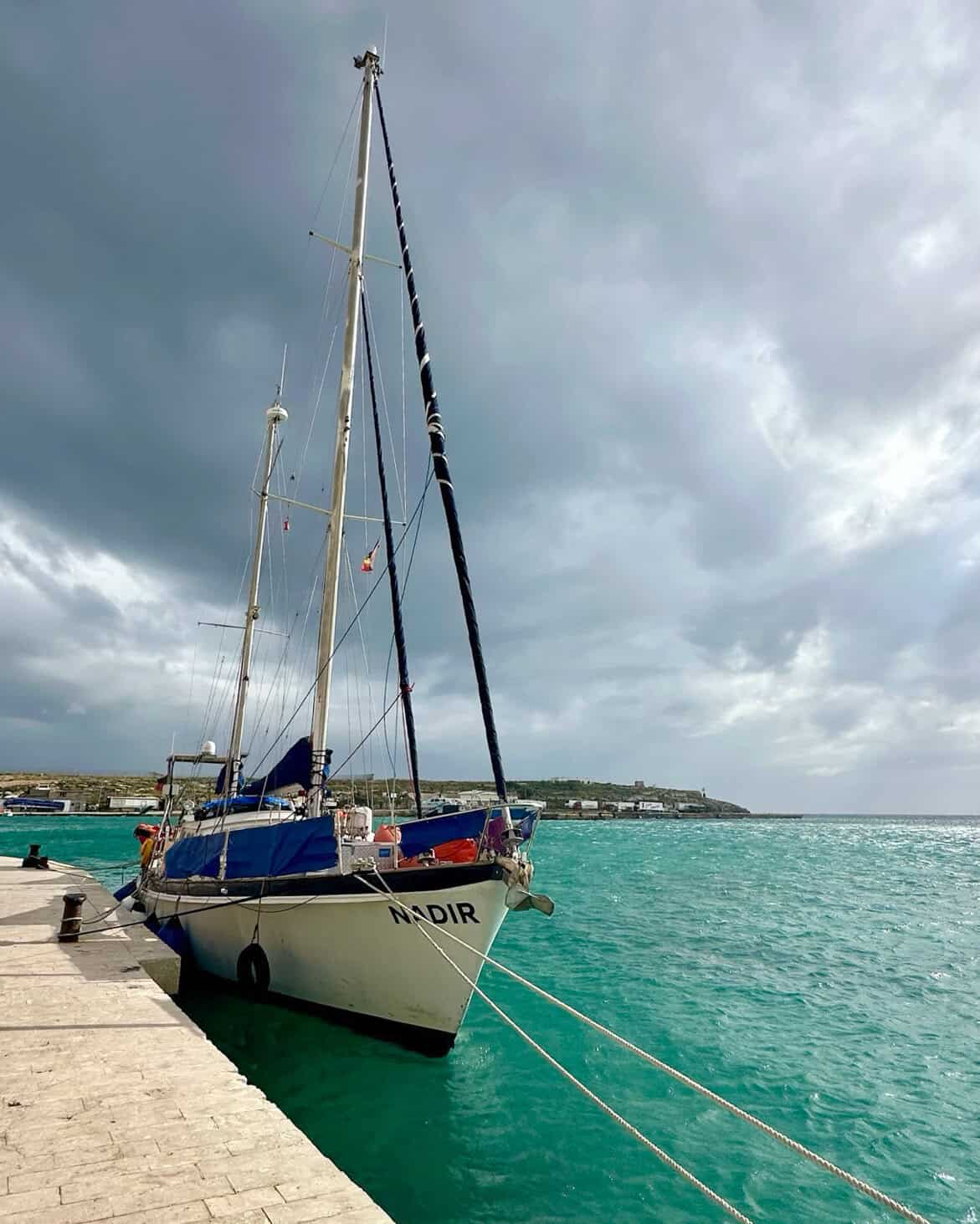
Rotation Report 1 – 2026 (8 March – 29 March, 2026) written by crew member Flore Judet.
Credits: Flore Judet, Kostis Sinanidis | RESQSHIP