During NADIR’s second operation in 2026, our crew witnesses how close horrors and relief lie together
For the second operation in 2026, NADIR’s crew departed from Malta on 5 April, after finishing operational briefings and stocking supplies on board. The following morning NADIR and its crew arrived off the coast of Lampedusa to carry out further rescue trainings and internalize important processes. That same morning, many requests for help came in from the NGO AlarmPhone. Unfortunately, all of them were too far from our position to respond to. During the following days, we headed to the operational area, which locates in international waters within the Libyan SAR zone, north of the MISKAR oil platform.
On the morning of 8 April, around 5 a.m., the NADIR crew members on watch detected two boats on the radar near the NADIR, moving with their lights off, which were then identified as vessels of the so-called Libyan Coast Guard. They contacted us via VHF, asking if we were in need of something. They were observing us for several hours without interacting with us further, just monitoring from a distance. Later in the morning, long after daybreak, they suddenly left at full speed.
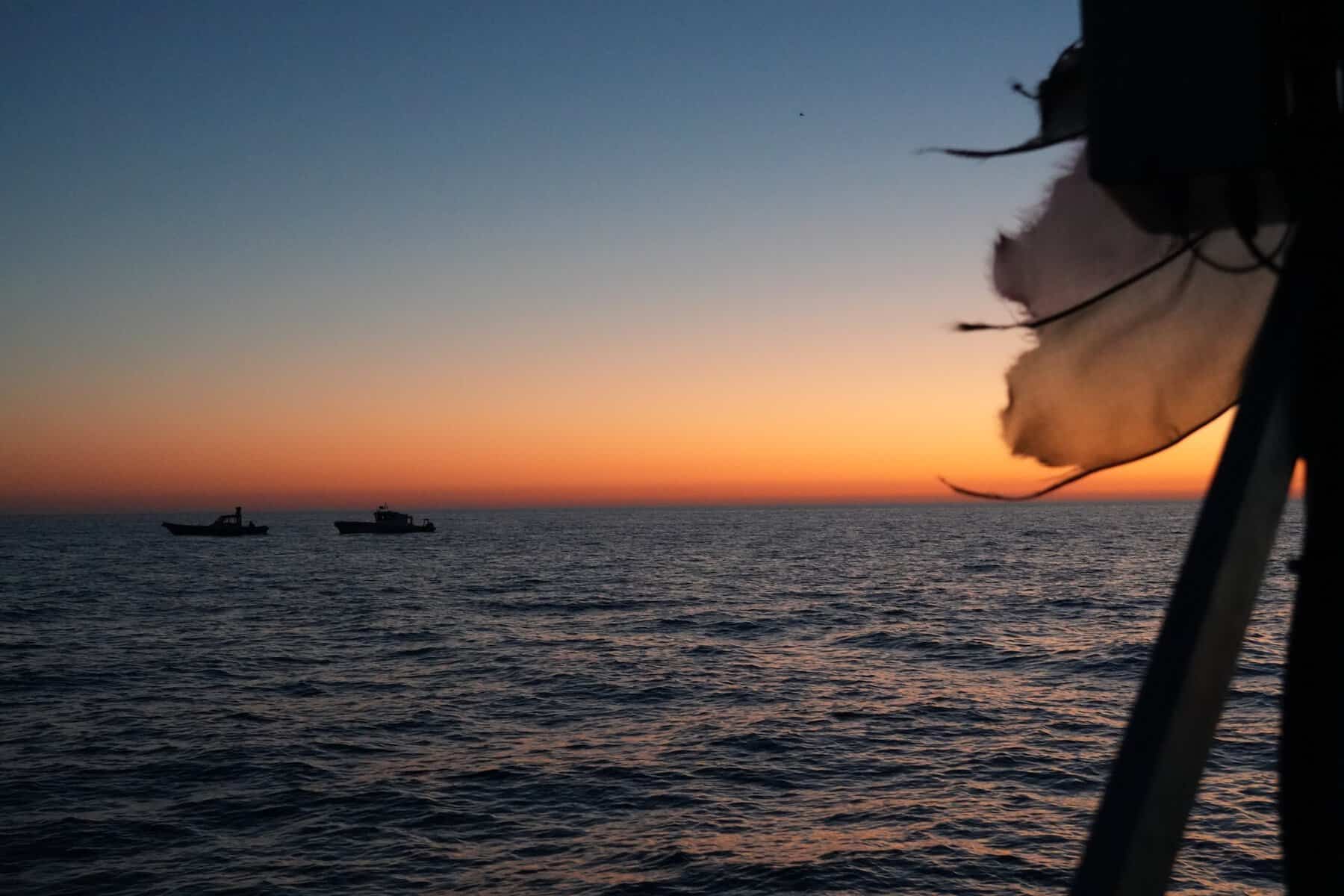
Patrolling the empty seas
Later that same day, in the evening, AlarmPhone sent a request for help for a boat in distress not very far from us. We headed to the coordinates we had been given but did not find anything noteworthy. We kept patrolling the area for several hours while it was getting darker and darker. Ultimately, we didn’t find any vessel and therefore have no information what happened to the people on the boat in distress we had been alerted about.
We spent about one week in that area without carrying out any rescue operations. All alerts we received were in locations which were too far away and impossible to reach before the so-called Libyan Coast Guard intervened.
Evacuation with so-called Libyan Coast Guards
In the morning of 13 April, Sea-Watch’s Seabird spotted people on an overcrowded rubber boat in distress. It was very close to our position, and we reached it within a few hours. The engine was broken and the tubes were already deflated, so the people needed immediate help. After carefully assessing the situation, we took everyone aboard NADIR.
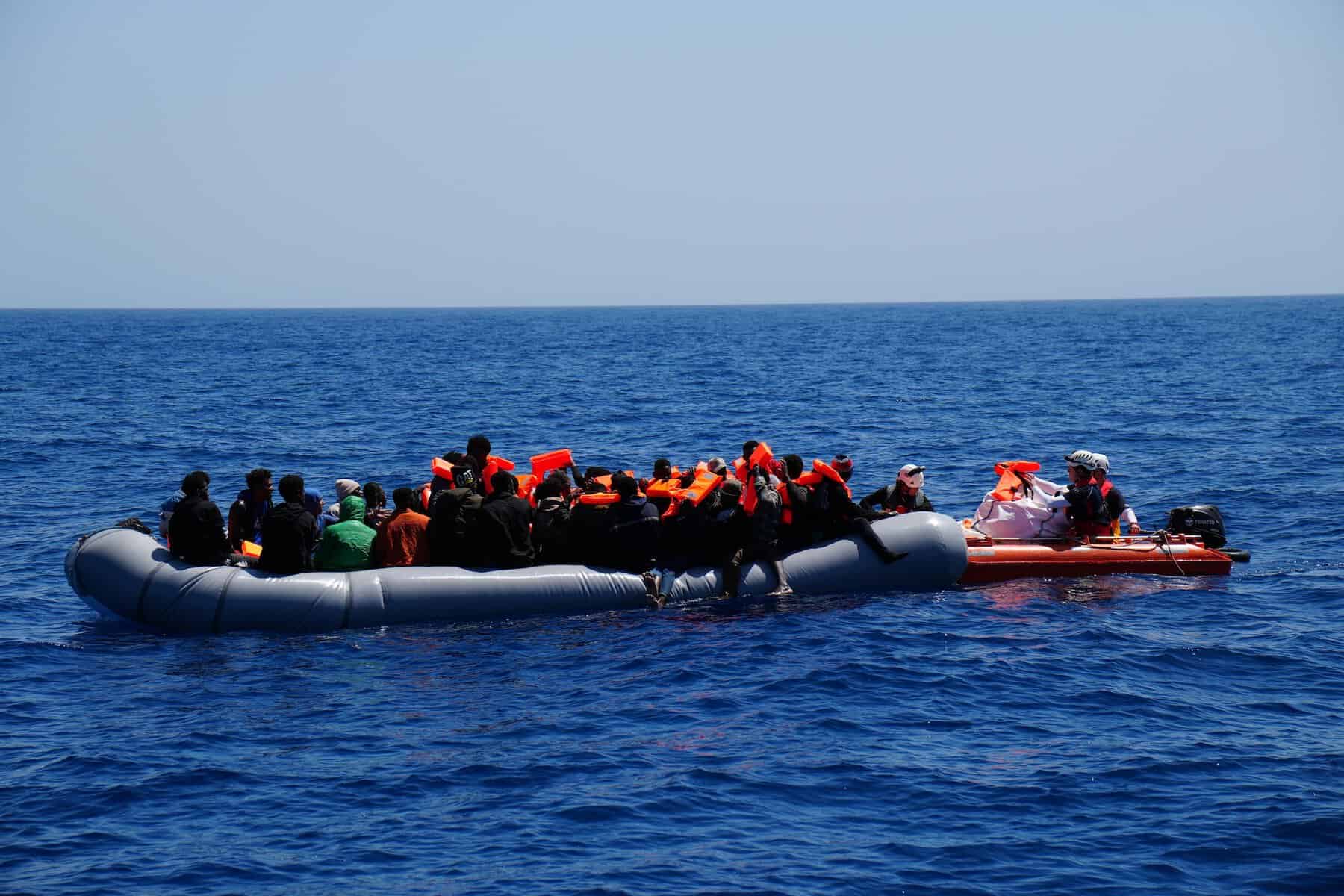
While our operation was still ongoing and just after we finished bringing all people on board, a patrol boat of the so-called Libyan Coast Guard approaching us at full speed. Whilst our tender was still in the water, they came alongside NADIR as we had already started moving again. Luckily, the ship under Libyan flag didn’t try to hinder us on our way, and after a while they left. The following morning, we were finally able to to bring all 53 survivors to the assigned port of safety, Lampedusa.
Strong emotions
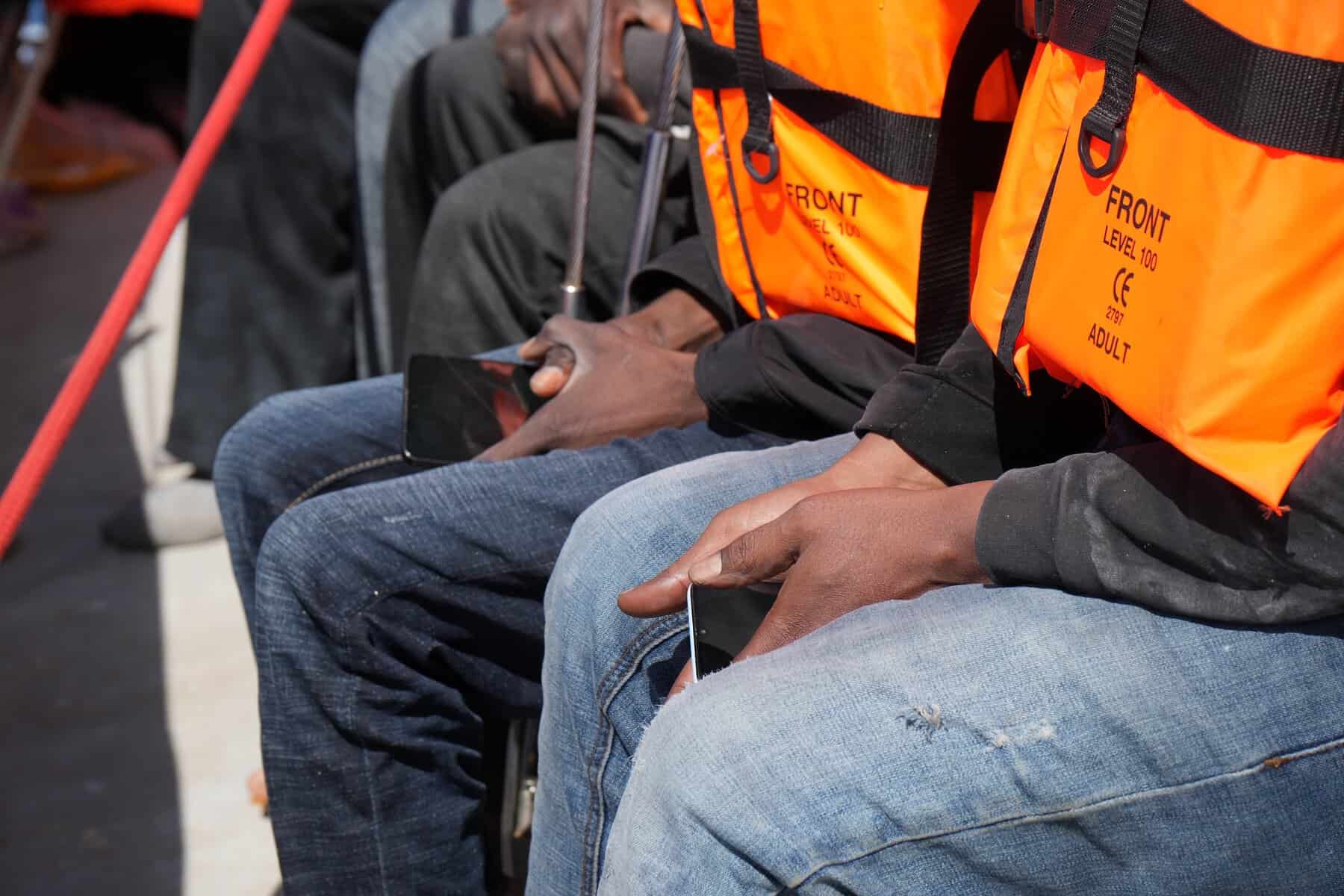
It was still dark in the early hours of 20 April, when we reached a small boat with engine failure, following an alert from AlarmPhone. After contacting the authorities, we started transferring 27 people onto NADIR. Among them were many unaccompanied minors – the youngest just 11 years old. As soon as he got onto the tender, he burst into tears, a release of emotion after days of fear and horrors at sea followed by the relief of finally being rescued.
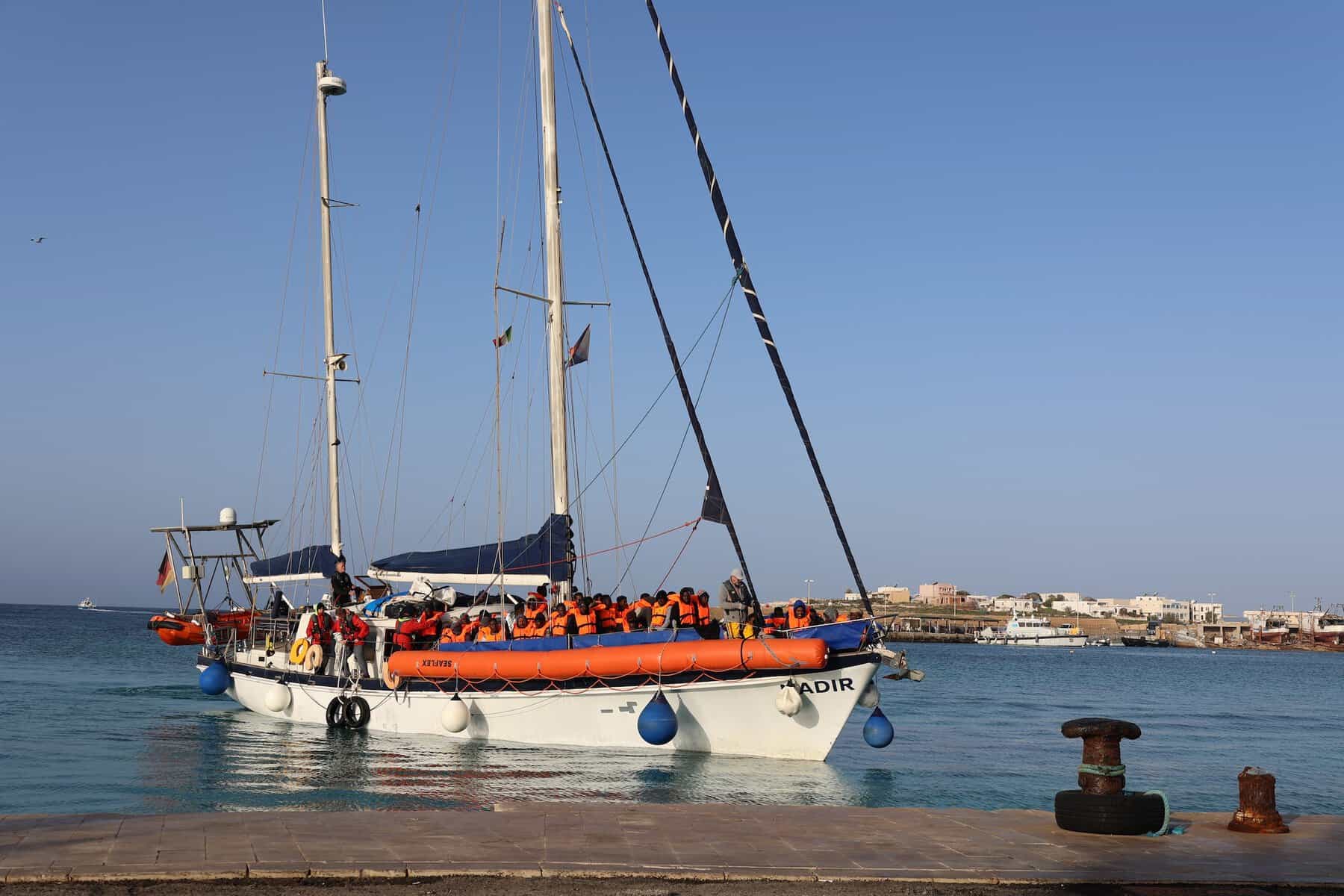
After the disembarkation of the 27 people in Lampedusa, we immediately headed back to the central Mediterranean. Only a few hours after our return, in the night between 21 and 22 April, a sudden sequence of events unfolded, in which we assisted 90 people in three different cases.
Evacuation from abandoned oil platform
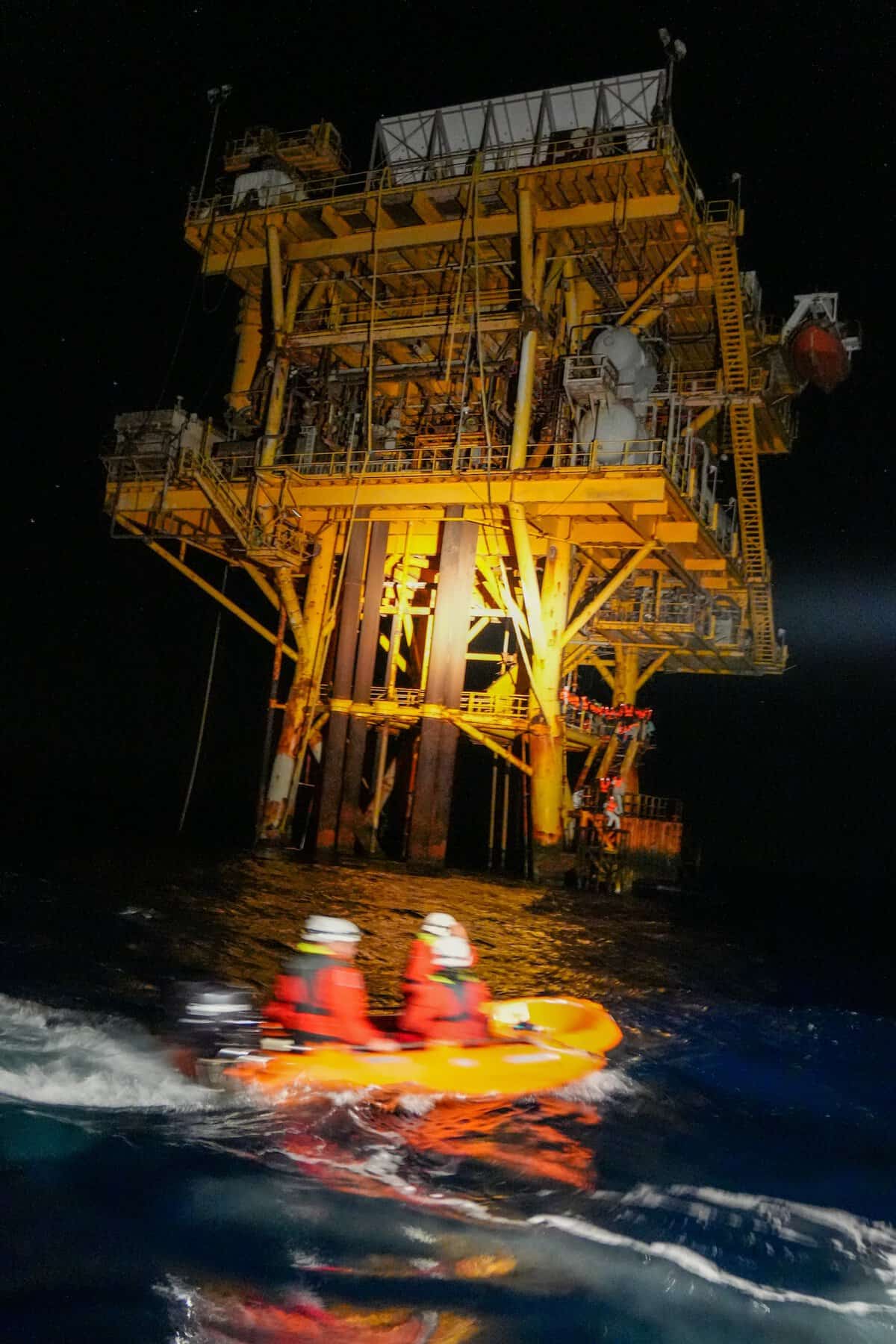
It all started late on 21 April 21, when we spotted 47 people on the abandoned Didon oil platform. Patrolling the area, we reached the platform around 11 p.m. We used our lights to illuminate the completely dark platform. And then we saw them: People on every level of the structure trying to get our attention.
We prepared to launch the tender to check their condition, when two patrol boats from the so-called Libyan Coast Guard came alongside us. Their intentions were unclear – they circled around us with no lights and no communication. The tender crew had already started transferring the people from the platform onto NADIR, including a pregnant woman and many unaccompanied minors. The Libyan vessel didn’t seem to want to intervene, but we positioned NADIR shielding the scene to protect the tender operation.
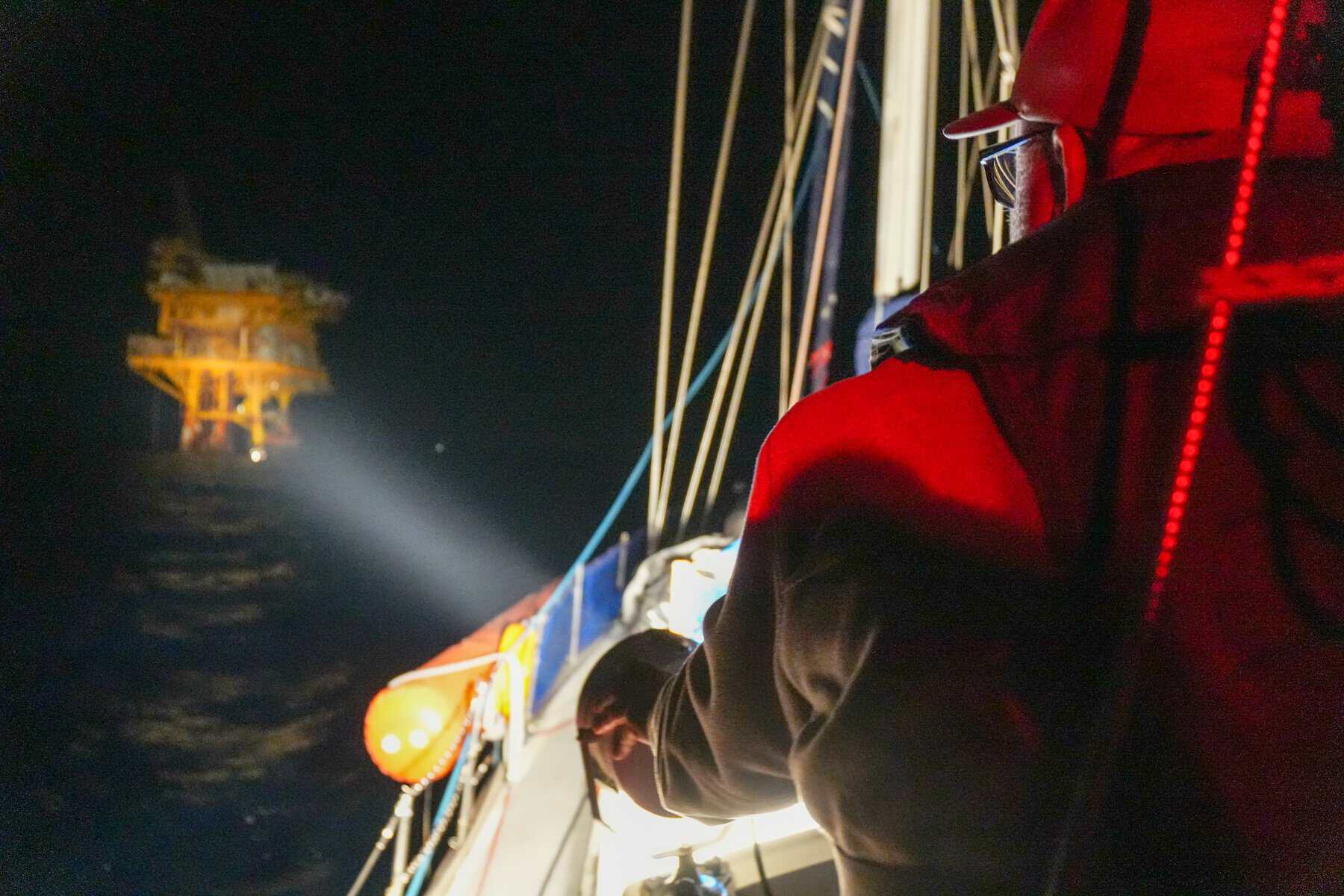
The people had reached the platform 10 hours earlier after their engine had started failing – with no food, no water, and no protection from the cold, the wind and the humidity at sea.
Three-fold operation
Right after finishing this operation, we received another alert from AlarmPhone about another boat in distress: 24 people on a wooden boat. We coordinated with the Tunisian authorities and responded. In the distance, we spotted very faint lights that turned out to be phone flashlights of the people aboard the wooden boat.
Once on scene, another boat came alongside us: another boat in distress, unseaworthy and no longer able to safely navigate. They screamed for help, so we started handing out life jackets. Then we brought all survivors from both boats on NADIR. Once again, the whole evacuation was observed by the so-called Libyan Coast Guard, who – fortunately – did not interfere.
By the early hours of the morning, we had 90 people aboard NADIR, including many children and people with limited mobility. After a long navigation to a place of safety, we arrived in Lampedusa on the evening of 22 April.
Operation Report 2, 2026 (4 April–25 April, 2026) written by crew member Erica Varone
Credits: Erica Varone, Merle Dammhayn | RESQSHIP