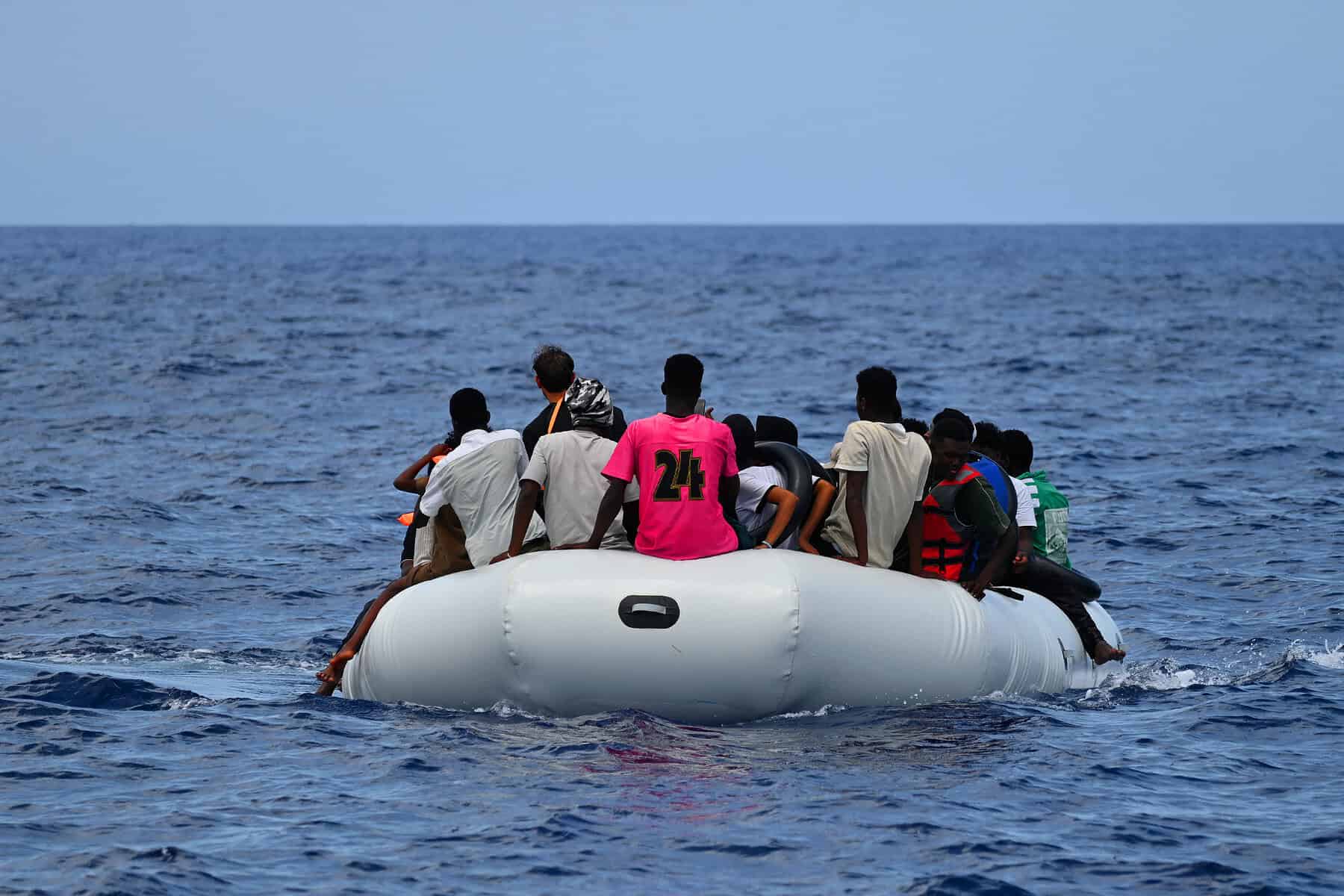
A scene straight out of a kindergarten: a dozen small people, ranging from babies to those a meter tall, along with a few mothers. Crowded into the living room of NADIR – some curious, some fooling around, and some simply tired. Not surprising: they had been traveling for days on a rubber boat. Packed tightly together, with no room to move, nothing to eat, and nothing left to drink.
A surveillance aircraft from the European Unions’ (EU) border agency Frontex spotted the boat, which was slowly heading north. The plane sent a “Mayday Relay” via radio: This means, “We see a boat with people in immediate danger of death.” On the NADIR, we receive this distress call, change our course, go “full speed ahead.” We locate the boat, provide assistance to the people, and take them on board.
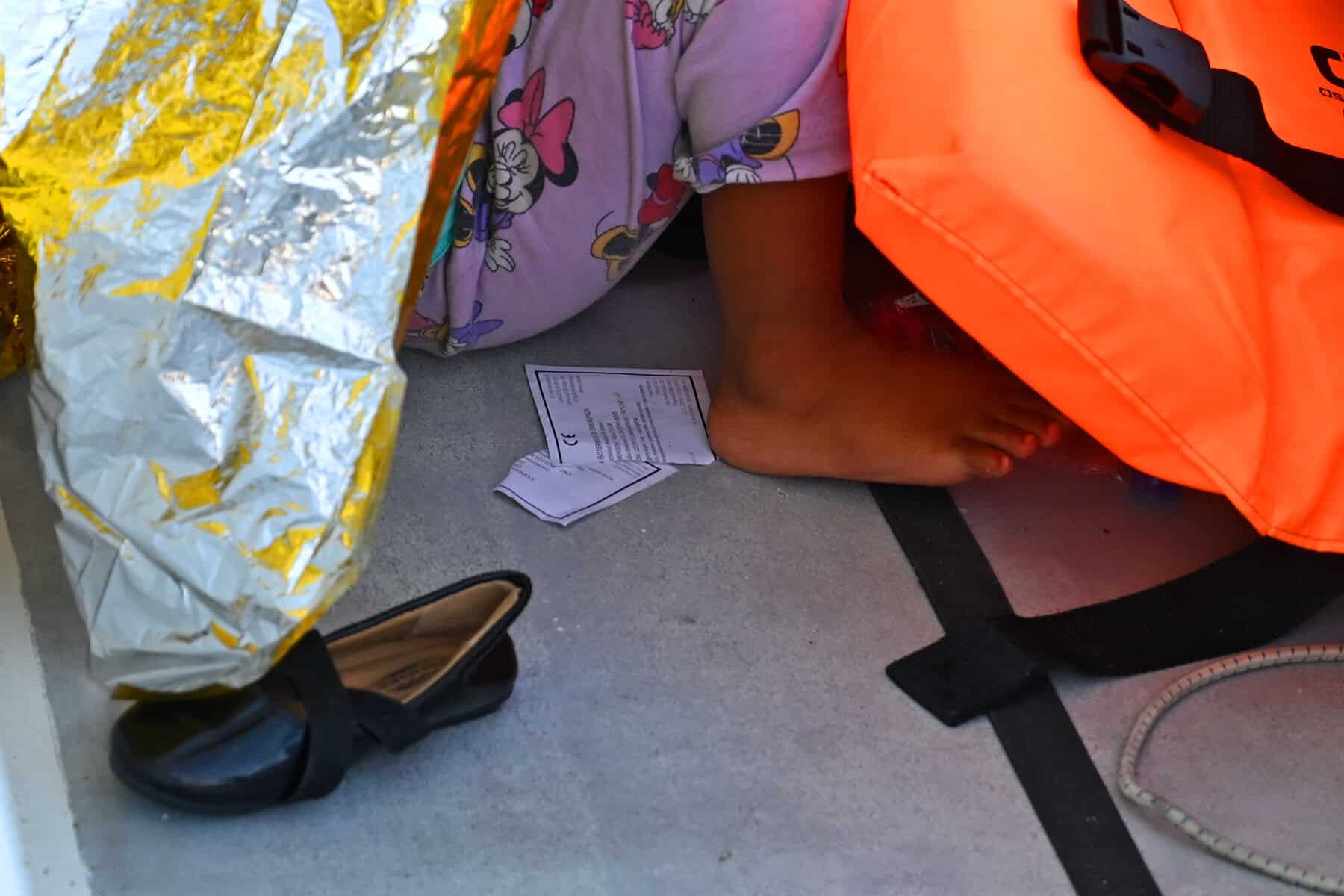
It is the third boat carrying refugees that we have been able to locate and assist during this operation period– the NADIR’s fourth deployment this year. What stands out during this three-week rotation are the many babies, children, and teenagers we take on board. In this case there are about 20 young and very young people; together with a dozen women, they make up more than half of the 51 people on the boat. Among them is a little girl – two or three years old – wearing a shiny patent leather shoe. She has only that one shoe left, but she won’t let go of it. We’ll come back to that later.
The Crew Becomes a Team
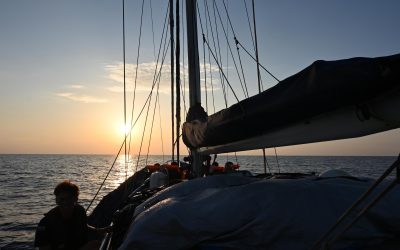
Flashback. In early June, just under three weeks ago, the crew gathered on the NADIR. Seven people from five countries and three generations. Different experiences at sea and in emergency operations. Men, women, diverse. Intense days of preparation: technical matters, provisioning, briefings, training. Getting to know one another, getting organised. Dealing with bureaucratic procedures, setting sail, then eventually heading for the sea area between Lampedusa, Tunisia, and Libya. Our task: To observe and document what is happening there with regard to people on the move. And, if people are in distress at sea, to fulfil every sailor’s duty: providing support and ensuring their safety. To make sure that people in distress can disembark at a place of safety.
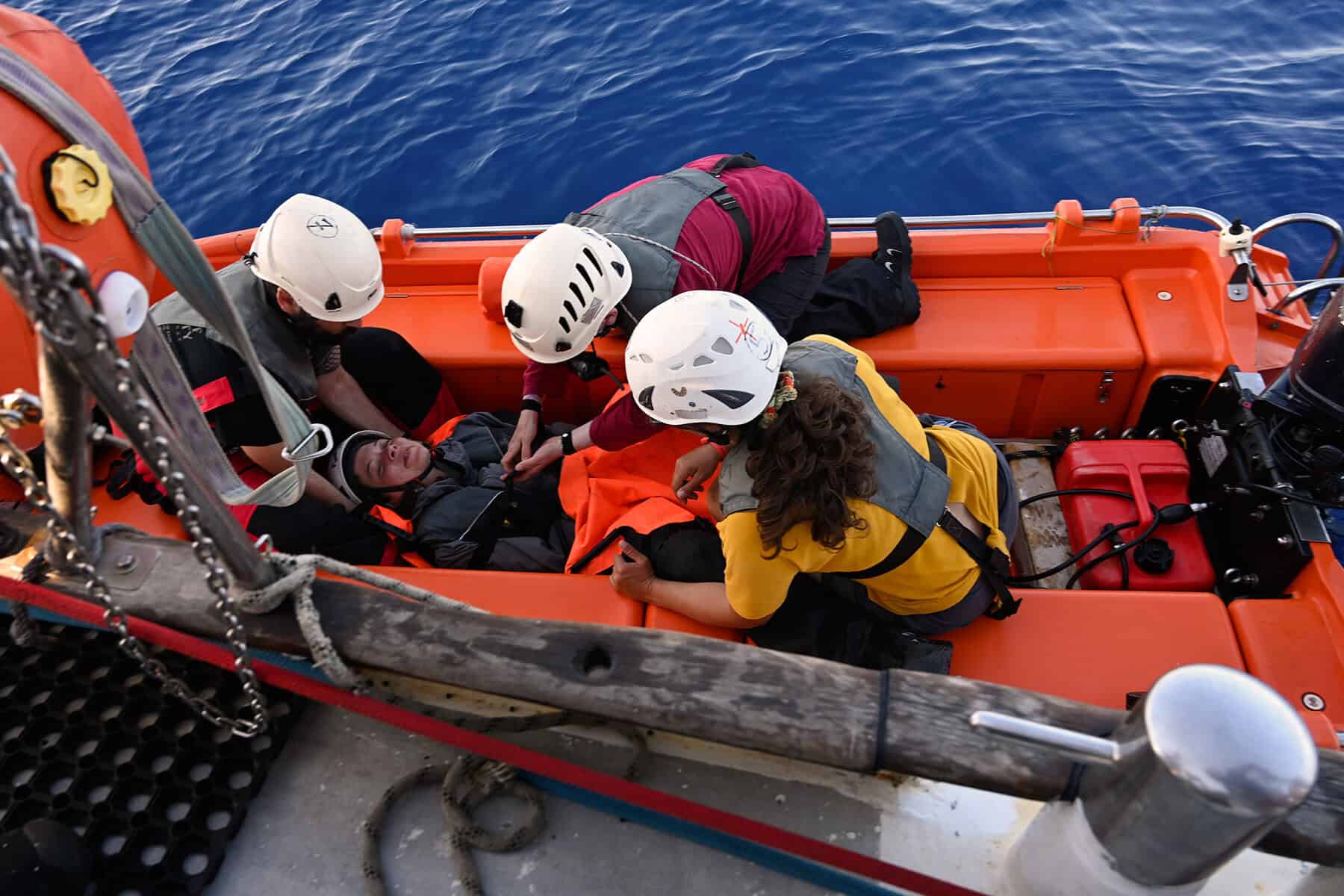
Our journey towards the Central Mediterranean is used for training – and already on the first morning, we receive a “Mayday Relay.” We set course, the engine running at “full ahead.” Three hours later, we spot an Italian Coast Guard vessel with many people on deck: The authorities have done their job; the refugees are safe. We can slow down the engine as the “Charlie Papa” (that’s what we call Italian Coast Guard vessels after the first letters of their call signs, “CP”) rushes away.
We use the boat of the evacuated refugees for a real scenario training simulation: Our crew has varying levels of experience and different procedural approaches. The key is to communicate and agree on a standardised procedure. We welcome this given opportunity and make the most of it.
Deceptive Calm
The next few days are exhausting; some would say frustrating. Despite calm weather, there are no boats in our patrolling area west of Tripoli. It’s a week in which simply nothing happens. A phenomenon that has occurred several times in the past. Why? Speculation. No one knows.
But we overhear that boats are repeatedly being reported east of Tripoli. So, we decide to move our position towards there. After all, in this very moment we are the only civilian rescue vessel in the region. Who, if not us, could help people on the move to reach a place of safety? We know that most state actors are not doing their part sufficiently.
The EU’s “human hunters”
Yes, we’re now closer to the locations of boats in distress that Frontex planes report every morning. But not close enough. The interceptors from the so-called Libyan Coast Guard are always on scene faster than we are. Perhaps, we can assume, because Frontex informs them sooner than it does the general shipping community. Every day, we witness how people trying to escape the hell in Libya are stopped by Libyan “rescuers” and forcibly returned. Funded and favourably regarded by the EU and it’s member states, such as Italy, equipping them with ships. It’s as if the fire fighters were rescuing people from a burning house, providing them first aid, and then taking them back into the burning house. That’s EU practice in a nutshell.
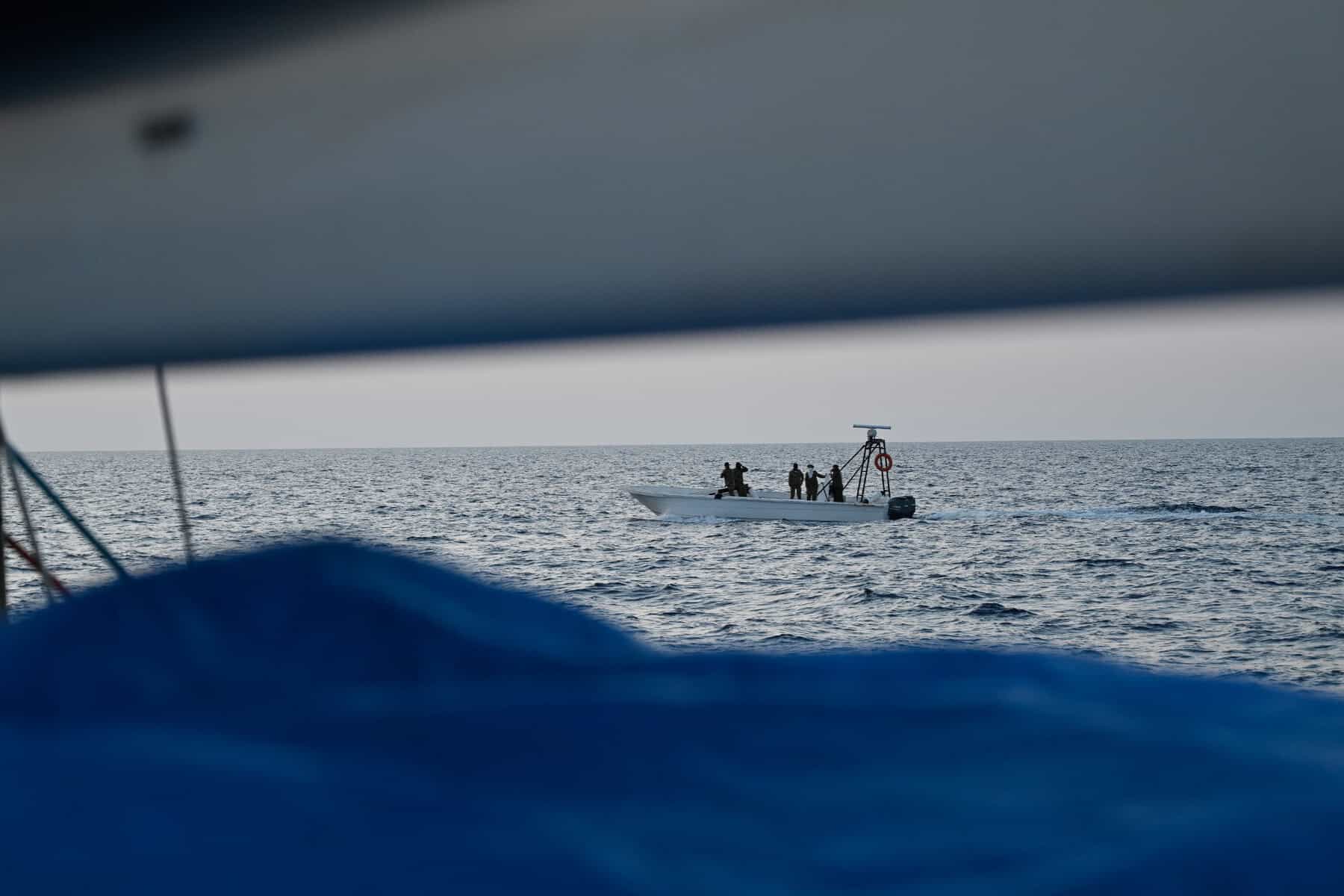
Here in the east, we, too, are being visited by the gangsters of this so-called Coast Guard. More or less officially – and sometimes even in unmarked boats – they circle NADIR. Masked figures in camouflage suits demand that we leave. They wave their rifles around and threaten to shoot us if we don’t move faster. We know that they did exactly that just a few days ago to other civilian ships – in international waters, far from Libyan territorial waters. That’s what they were trained to do by the EU.
18 hours on the deck of the NADIR
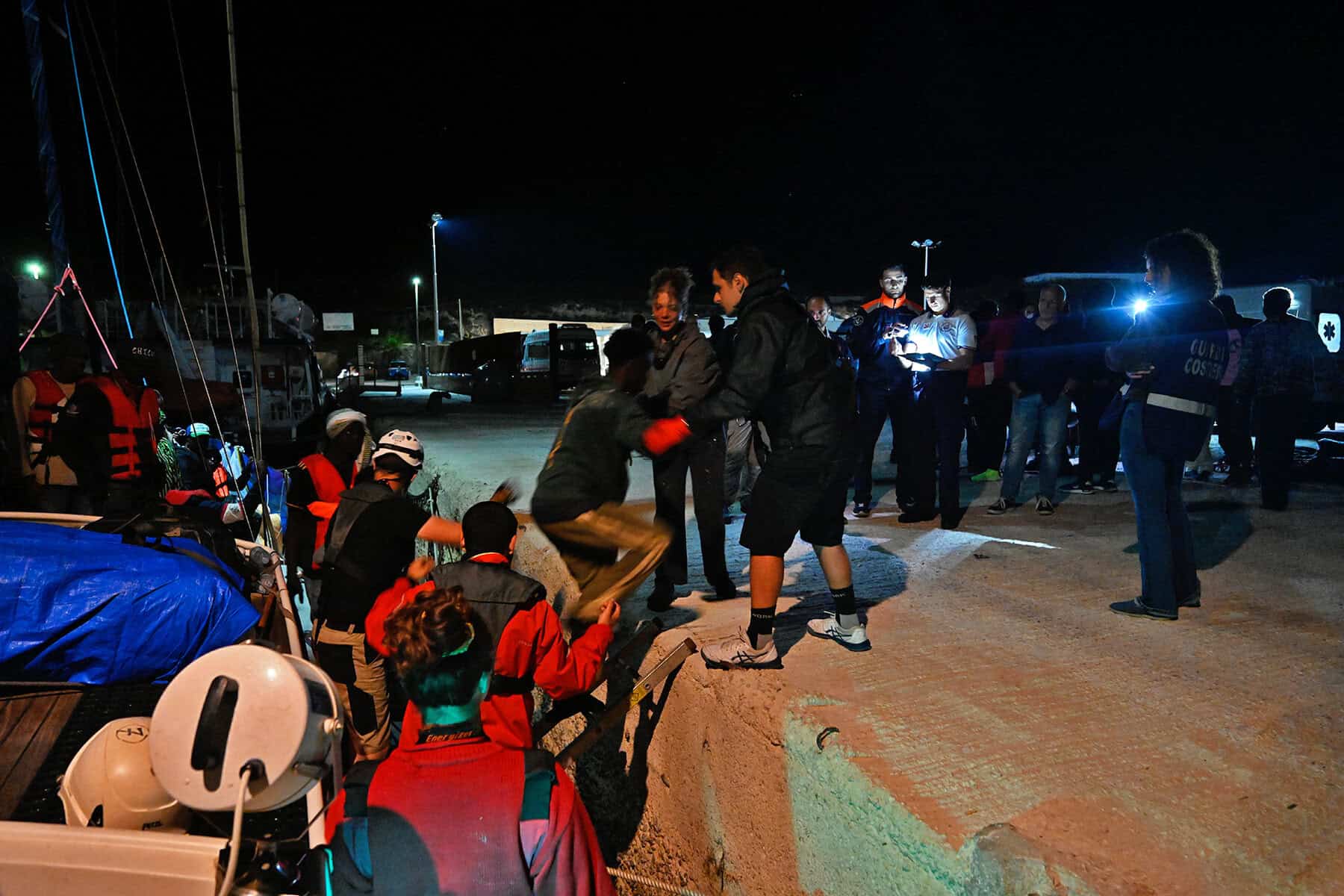
With a weather deterioration coming, we head west again – straight toward a “Mayday Relay” far to the south. We set course, open the throttle, and track the position reports – first from a Frontex aircraft, then from Albatross UNO, a civilian search plane. We find the boat: 62 people onboard, including many women and children, some of whom need medical assistance. We take everyone on board and take care of them. We set course north and request permission from the authorities to bring the people ashore in Lampedusa. The request is granted. Eighteen long hours later – our guests have to endure the journey crammed together on deck – we reach Lampedusa, and the survivors can finally set foot on land.
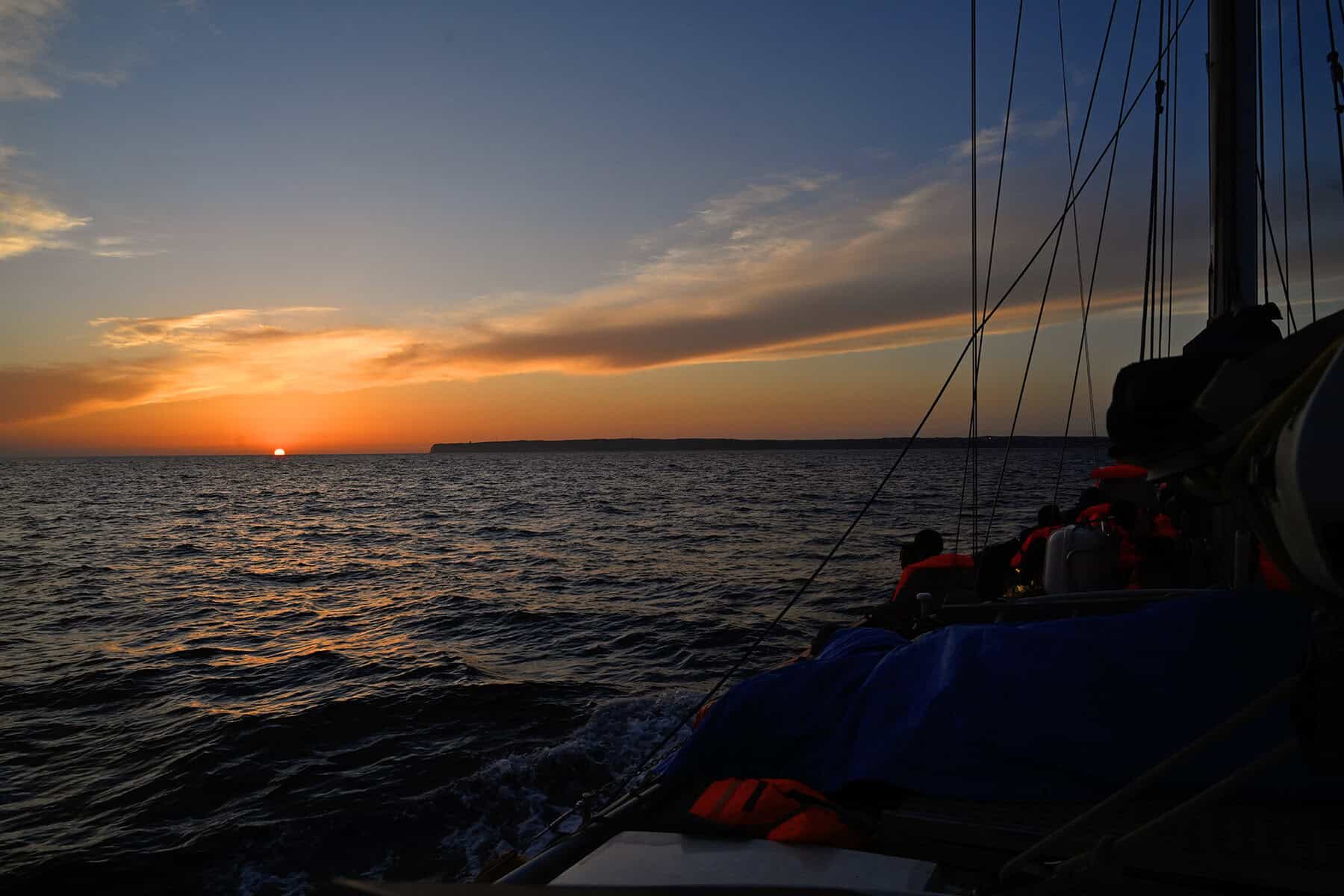
Lampedusa? The island of wonderful people. People who help others in need wherever necessary. The island that says “Welcome” and places little sculptural hearts at the harbour entrance. But it’s also part of a state that would rather put up barbed wire and trample on people (EU approved).
Uncooperative Authorities
The strong winds have passed; over breakfast, we hear again “Mayday Relay.” We warm up the engines, coordinate with the authorities, cast off: We’re ready to help. It takes about four hours to locate the boat with the people in distress. This time, we’re hoping the authorities will respond – just a few days earlier, the Italian Coast Guard had arrived at the same distance. But this time? A bureaucratic ping-pong: Italy says “Call Malta,” Malta instead states “Standby,” Italy: … No authority is fulfilling its obligation. The obligation – regardless of regional responsibility – is to ensure that people in distress are helped. Italy: “No, niente.” Malta: “No, xejn.” NADIR: “Yes, what else!”
Via email, we grant authorities a little more time to react and then we take all people on board. As a crew, we’re a bit frustrated because by communicating with the authorities we put these refugees through a 3 hour delay. Even though we knew the authorities wouldn’t respond and instead leave this “case” to civil actors, yet again. Finally, 38 people are able to disembark safely in Lampedusa during the night. Just as, a few days later, the people mentioned at the beginning of this story.
Also on this trip, many can be said about the authorities. About Frontex, whose planes circle above a boat for hours until the very last person is aboard the NADIR. About the passing the buck to other authorities, even though every authority is obligated to take responsibility – and cannot delegate that to civilian vessels. Also, about the Guardia Costiera on Lampedusa, which – in our view – would gladly help but is not allowed to. About the EU, which put its new pact on asylum and migration (Common European Asylum System, in short: CEAS) into effect during this year’s fourth rotation of NADIR
People like you and me
Our focus is on the people on the move. We were able to help 151 of them disembark in a safe place – but unfortunately, we couldn’t help an unknown number of others. We had ten, twelve, eighteen hours on board to talk with them, to empathize, to be silent.
What we see is nothing new: exhausted people. When they tell their stories, we hear of horrifying experiences. We see scars, sores, burns, and other physical marks. Pregnant women, babies – whose fathers are often found among the Libyan rapists. Often, we look into empty eyes and can only hope that they can still see a future.
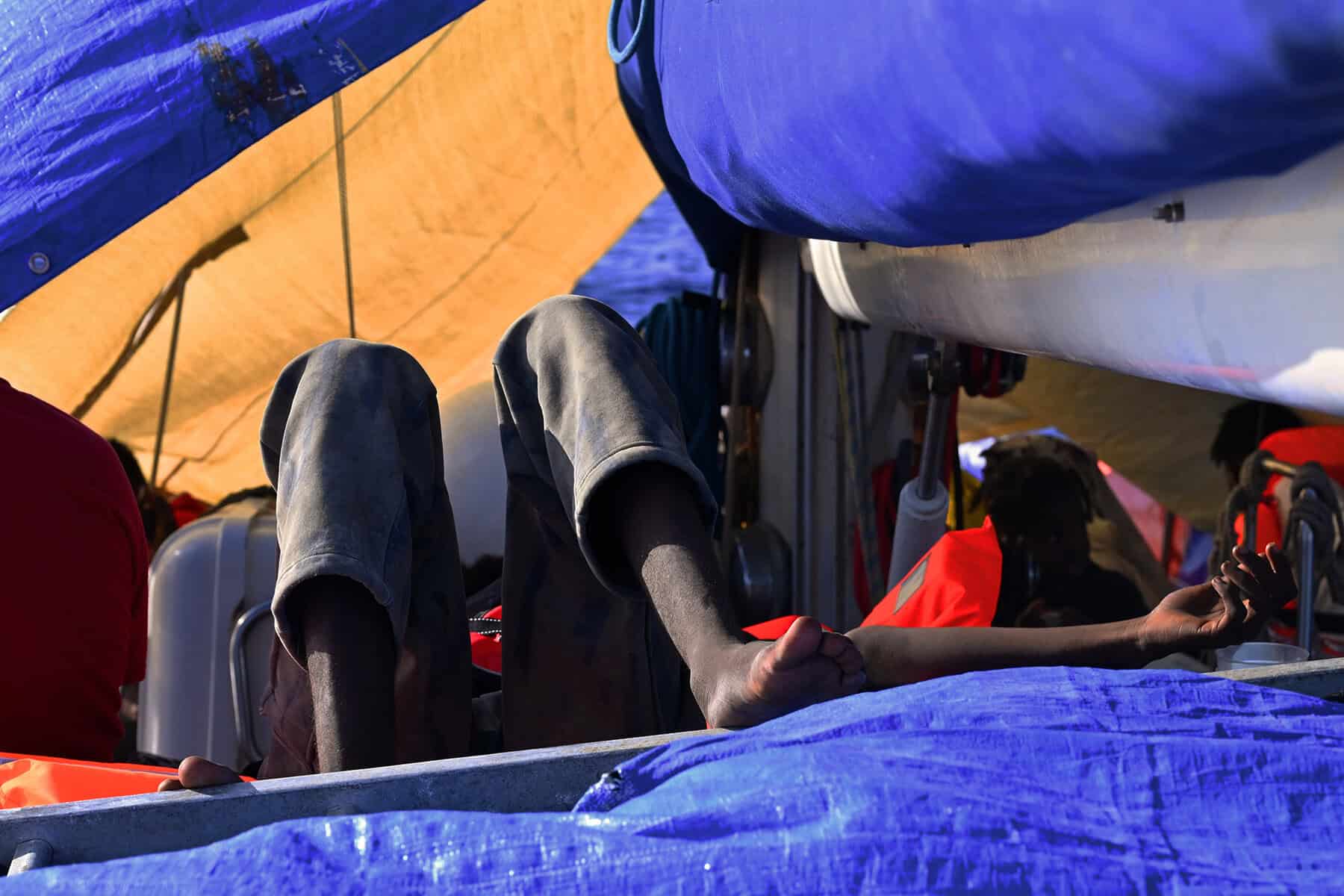
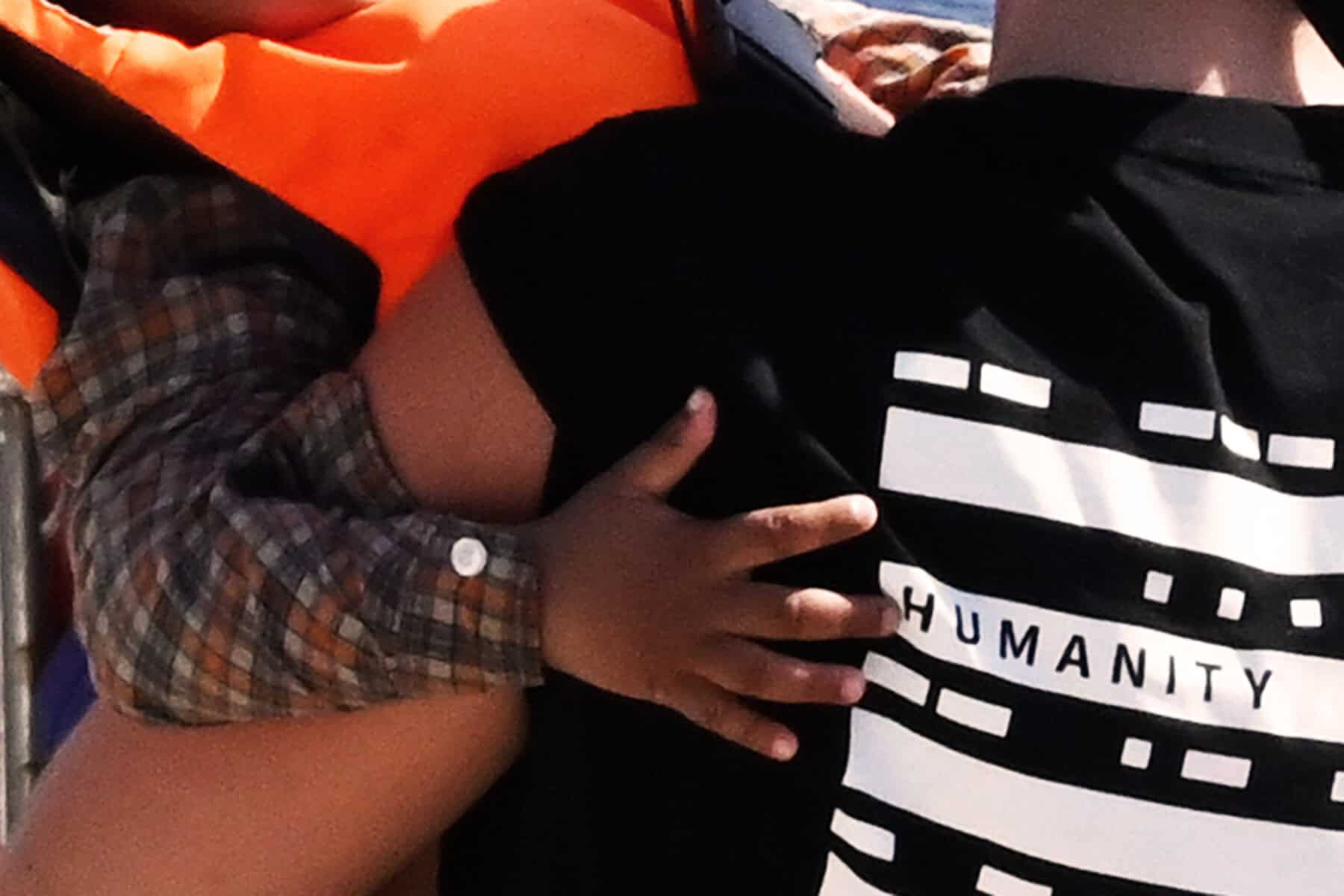
We treat these people just like anyone else. We welcome them aboard our ship, give them the chance to use the restroom or take a shower, brush their teeth, have something to drink, and eat a little something. Basic internet access so they can send short messages. It’s all very simple. We listen to people when they want to talk, and keep them company when they’d rather stay silent. We play with the kids. It doesn’t matter whether they’re from Sudan, Mali, Eritrea, Swabia, or Sweden – they’re people just like you and me. Valuable people.
With one foot in Europe
Two years ago, we discovered an empty boat. The people inside had been pulled back by the so-called Coast Guard. We found a pair of shiny patent leather shoes that must have belonged to a little girl. We wondered about the fate of this child, whose dreams (or rather, those of her parents) had come to an end by the terror of EU-funded Libyan gangsters. The patent shoes were left behind at sea.
On this trip, we accompanied 151 people to disembark in a safe place, in Lampedusa. But in doing so, we also handed them over to the new EU doctrine, which locks up children like the little girl with the single shiny leather shoe.
That one shoe. With one foot in safety. Is there a future in Europe?
Operational Report 4 – 2026 (30 May – 20 June 2026) written by Friedhold Ulonska
Credits: Friedhold Ulonska | RESQSHIP